
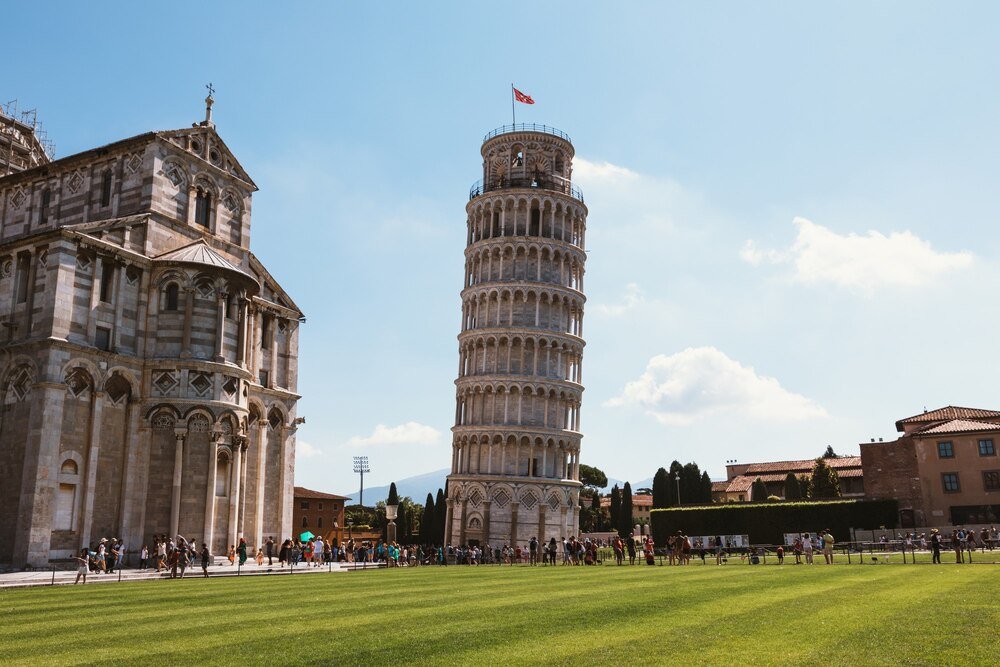
Planning what to do in Pisa can feel oddly tricky: everyone knows the Leaning Tower, but beyond that the city often looks like a half-day stop on the way to Florence. The reality is that Pisa is compact enough to be simple, yet layered enough to fill a very good day or even two. With a bit of structure you can see the famous sights, eat well, and still have time to walk along the river like a local.
This guide focuses on practical things to do in Pisa, how to group them, and where it actually makes sense to spend time rather than just ticking off landmarks.
Start with the basics: timing and layout of Pisa
Pisa’s historical center is small and walkable. From the main train station (Pisa Centrale) to the Leaning Tower area (Piazza dei Miracoli) it’s about 20–25 minutes on foot through the old town. That walk already covers a good chunk of the city’s best streets and river views, so there’s no need for taxis unless luggage is involved.
For a focused visit, plan around the tower area in either the early morning (before tour buses) or later afternoon. Midday, especially in summer, brings crowds and heat that make the square feel more like an amusement park than a medieval complex.
If flying into Pisa Airport (PSA), the tiny airport-to-city train (PisaMover) gets to the main station in about 5 minutes. From there, everything in this article is reachable on foot.
Piazza dei Miracoli: more than just the Leaning Tower
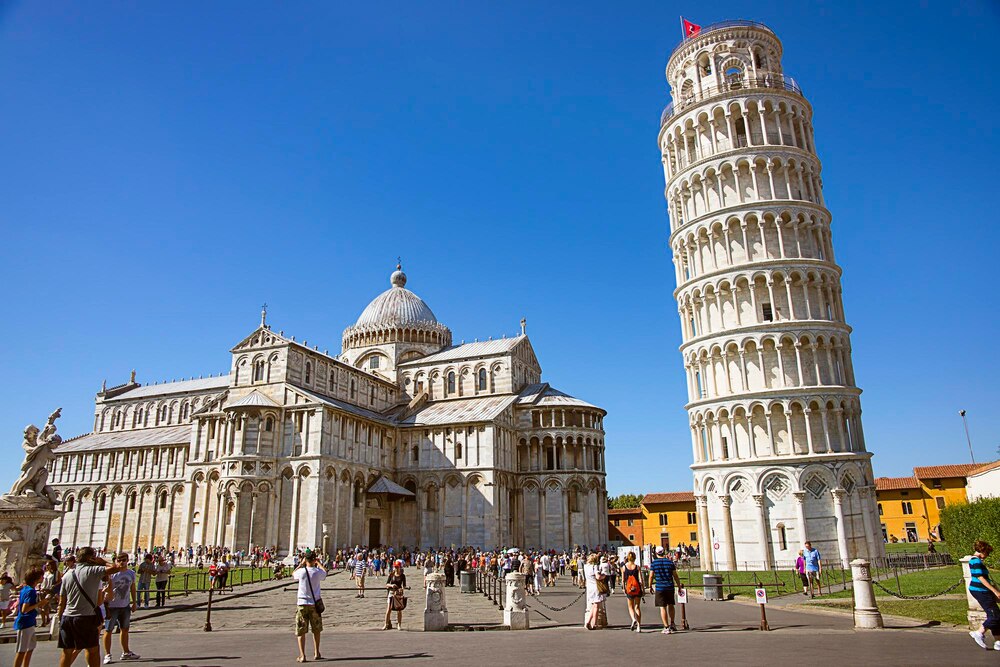
Piazza dei Miracoli is the obvious starting point. The key is not to treat it as a single photo stop but as a cluster of separate, worthwhile sights. The main four are:
- Leaning Tower of Pisa (Campanile)
- Cathedral of Santa Maria Assunta (Duomo)
- Baptistery of San Giovanni
- Camposanto Monumentale (monumental cemetery)
A basic rule: if time is short, choose one or two interiors, not all of them. Trying to cram everything plus the climb up the tower into a rushed two-hour window usually turns the visit into a queue marathon.
Climbing the Leaning Tower
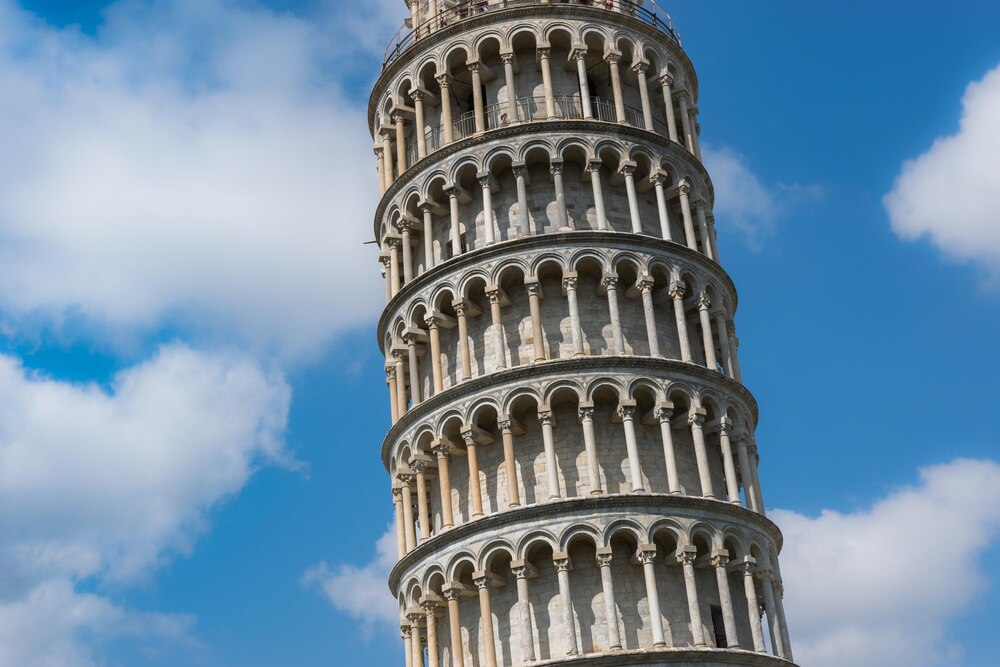
Climbing the tower is the headline activity in Pisa. Tickets are timed, usually in 15- or 30-minute slots, and numbers are limited. Pre-booking online is strongly recommended in high season; day-of tickets often sell out or are only available late in the day.
The climb is just under 300 steps in a narrow spiral staircase. The tilt is very noticeable as you walk up; some people feel a bit dizzy, so it helps to take it steady. There’s no real “fitness test” at the entrance, but those with serious vertigo or knee problems usually skip this one.
From the top, views stretch over the red-tiled roofs of Pisa, the cathedral complex, and out towards the hills. On clear days you can see all the way to the coast. Time allowed at the top is limited, typically around 30 minutes, and staff will usher each group down to keep things moving.
Bag storage is mandatory for larger bags and backpacks; a free cloakroom is located nearby. Arriving at least 15–20 minutes before the slot avoids unnecessary stress.
Cathedral and Baptistery: where the real atmosphere is
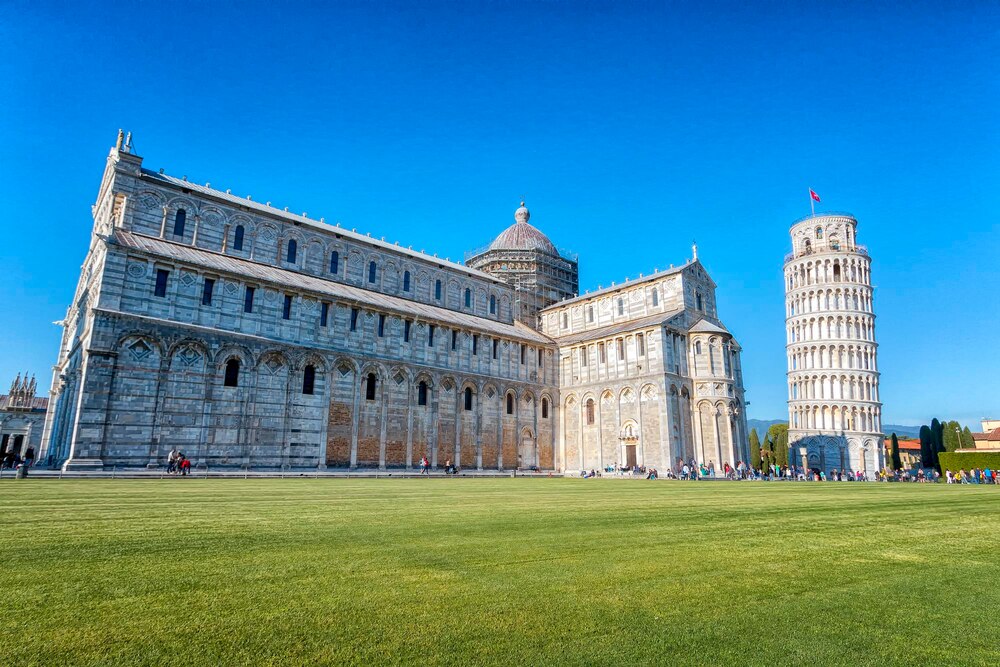
Many visitors just walk around the outside of the cathedral and baptistery, but the interiors are what make Piazza dei Miracoli feel like more than a backdrop for tilted selfies. A combined ticket for the Cathedral, Baptistery and Camposanto is much better value than buying each separately.
The cathedral interior mixes white-and-dark marble, arches and mosaics in a way that feels closer to Islamic or Byzantine influences than the more familiar Florentine style. It’s spacious, dimly lit and surprisingly calm, especially in the late afternoon when tour groups have thinned out.
The Baptistery looks relatively simple from outside, but inside it’s all about the acoustics. Every half hour or so, a staff member often demonstrates the echo with a short chant, which resonates for several seconds and fills the whole building.
Climbing to the upper gallery of the baptistery is worth the extra effort. The view back into the cathedral’s apse and over the square gives a different angle on the complex and a good photo spot for the tower without having to stand in the grass.
Camposanto and ticket strategy
The Camposanto Monumentale tends to be the quietest of the four main sites and yet it often leaves a stronger impression than the tower itself. It’s a rectangular cloister around a central lawn, filled with sarcophagi, tombs and surviving medieval frescoes.
During World War II, bombing caused heavy damage to the frescoes. Restoration has been ongoing for decades, and some sections are now beautifully visible again. The long painted walls, with their depictions of hell, judgment and everyday life, offer a surprisingly human counterpoint to the postcard-perfect lawn outside.
The name “Piazza dei Miracoli” (Square of Miracles) was coined only in the early 20th century; in medieval times it was simply the cathedral square of Pisa, then a major maritime power rivaling Venice and Genoa.
As for tickets, the usual approach that works for most people is:
- Book a tower climb slot for early morning or late afternoon.
- Add the combined ticket for Cathedral + Baptistery + Camposanto.
- Visit the other three either right before or right after the tower, depending on timing and crowds.
This way the whole complex can be covered in a relaxed 2.5–3 hours, including plenty of photo time on the lawn.
Walking the historic center and riverfront
Once the tower area has been covered, the best thing to do in Pisa is simply to walk. The route from Piazza dei Miracoli back to Pisa Centrale station through the old streets and along the river already hits most of the city’s atmosphere in a natural way.
The main spine is Borgo Stretto, a medieval street with arcades, small shops and cafés. Parallel and nearby streets like Via Guglielmo Oberdan and Via San Martino feel more local, with fewer souvenir stands and more everyday life.
Down by the Arno River, the Lungarni (the streets running along the banks) are lined with elegant palazzi. Late afternoon is the best time to walk this stretch, when the light hits the facades and students spill out of the university buildings.
On the south bank, stop briefly by the tiny Santa Maria della Spina, a richly decorated Gothic church tucked almost into the river itself. It’s small and often closed or partly open, but even a look at the outside is worth a short detour.
Pisa is one of Italy’s oldest university cities. Around a quarter of the population are students, which is why cafés and bars stay lively even outside the classic tourist season.
Museums and quieter corners
Pisa’s museums don’t draw big crowds, which makes them useful if the tower area feels too busy or if bad weather hits. Two in particular are worth a look if there is half a day to spend in the city.
Museo dell’Opera del Duomo: the “backstage” of the cathedral complex
Right by Piazza dei Miracoli, the Museo dell’Opera del Duomo holds many of the original sculptures, artworks and relics from the cathedral, tower and baptistery. The copies seen outside in the square are often replacements; the fragile originals live here.
This museum is quieter than all the other main sights. Rooms are usually calm, with enough space to actually look at sculptures by Giovanni Pisano and others without jostling. There’s also a good view back onto the tower and cathedral from some windows, especially nice on hot days when being in the shade is a bonus.
Audio guides and labels explain the role of Pisa during its peak as a maritime republic. That context helps make sense of why such an apparently modest modern city ended up with such an outsized cathedral complex.
For those short on time, think of this museum as optional but highly rewarding if already planning to spend over half a day in Pisa.
Museo Nazionale di San Matteo: medieval and Renaissance art in peace
About a 15-minute walk from the tower area, the Museo Nazionale di San Matteo sits in a former convent. It’s dedicated mostly to medieval and early Renaissance art from Pisa and the wider Tuscan region.
The collection includes works by Simone Martini, Masaccio, and others, along with sculptures, wooden crucifixes and ceramics. It’s not staged like a blockbuster gallery; the charm lies in how unhurried and uncrowded it feels.
A visit here works well for anyone interested in religious art or looking for a quiet hour away from the more hectic parts of town. The building itself, with its cloister and old stone, contributes to that sense of calm.
Combining San Matteo with a walk along the north bank of the Arno creates a simple loop that balances out the “greatest hits” feel of Piazza dei Miracoli.
Eating and drinking in Pisa
Food in Pisa leans Tuscan, but with some local touches. Prices are generally a bit lower than Florence, especially away from the most touristy streets around the tower.
What and where to eat
Typical Pisan and Tuscan dishes show up on most menus: pappa al pomodoro (bread and tomato soup), ribollita (hearty vegetable and bread stew), grilled meats, and a lot of beans and chickpeas. Near the coast, fish is also common, especially in places along the river or on the road out toward Marina di Pisa.
For a quick, cheap bite, street-food style cecina (chickpea flatbread) works well. It’s salty, simple and usually eaten in a slice inside focaccia like a sandwich. This is the sort of thing to grab in small bakeries around Borgo Stretto or closer to the station.
For a sit-down meal, the lanes just off Borgo Stretto or on the south side of the river offer better quality-to-price ratios than the obvious restaurants right by Piazza dei Miracoli. The difference in atmosphere is noticeable: fewer multi-language menus being waved in the air, more Italian spoken at the neighboring tables.
In the evening, bars and wine spots around the university area fill up with students. Aperitivo culture is alive here: order a drink in the early evening and many places will include small snacks or access to a simple buffet.
- Order local Tuscan wines by the glass; house wines are often perfectly decent.
- Try at least one dish with cinta senese (heritage pork) or wild boar if meat is on the menu.
- For dessert, gelato shops around the center are usually reliable; lines in front of a place are a good sign.
Day trips and combining Pisa with other places
Pisa is easy to combine with other Tuscan destinations thanks to its rail connections. For many travelers it ends up as a base for a night or two or as a structured stop on the way to somewhere else.
The two most logical pairings are:
- Lucca – less than 30 minutes by train, walled city with bikeable ramparts, calm streets and a very different feel from Pisa. A full afternoon or full day works well.
- Florence – about an hour by train. Many people fly into Pisa, stay a night, then head on to Florence after seeing the tower and center.
Those with a car (or patience for bus connections) can also reach Marina di Pisa and the coast quite easily. The beaches here are not the most spectacular in Italy, but for a quick taste of the sea combined with a cultural visit, the combo works.
Trains between Pisa, Lucca and Florence run frequently and are usually reliable. Buying tickets at the station ticket machines is straightforward; just remember to validate the paper ticket in the small green or yellow machines before boarding regional trains.
For a tight itinerary, a solid strategy is: half a day to a full day in Pisa, a day in Lucca, and then on to Florence or the Chianti area. That way the Leaning Tower becomes part of a broader, more relaxed route rather than a frantic box to tick in an hour.