
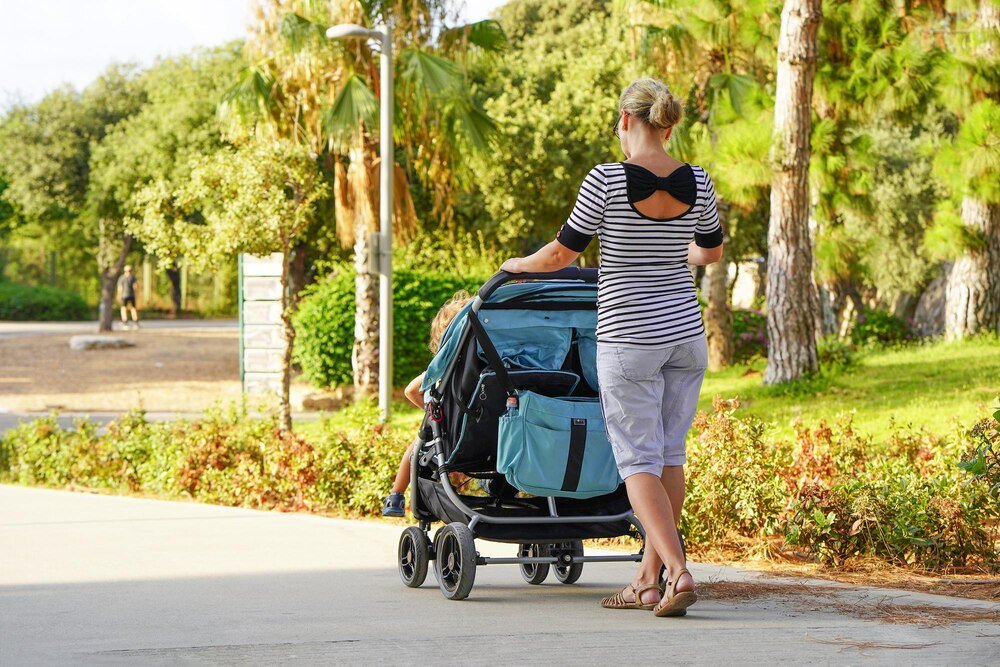
Travel strollers live a hard life: dragged through airports, folded half-asleep at security, bumped into overhead bins. A good model makes flying with a child far less stressful and saves energy for when it actually matters. The best travel strollers for plane use are compact enough for cabins, sturdy enough for daily sightseeing, and simple enough that anyone can fold them under pressure at the gate.
This guide focuses on strollers that really work in airports and on planes, with specific models that consistently pass airline checks and survive more than one trip.
What Makes a Stroller Good for Air Travel
Before looking at specific models, it helps to know what separates a random lightweight stroller from a true travel stroller that works well for flying.
The first factor is folded size. Airlines usually allow something close to cabin luggage dimensions: around 55 × 35 × 25 cm / 22 × 14 × 9 in. Ultra-compact models that fit this profile can often go into the overhead bin. That means no waiting at the gate, no risk of damage in the hold, and a stroller ready to use the second the plane door opens.
Weight is the second piece. Under 6–7 kg (13–15 lb) makes a noticeable difference when carrying the stroller plus a bag plus a child. Some of the lightest models drop under 5.5 kg, but usually sacrifice suspension and padding. For frequent travel and everyday city use, a slightly heavier but more solid stroller tends to work better.
The last crucial piece is the folding mechanism. When boarding is called and a child is melting down, a one-hand, intuitive fold is priceless. Strollers with fussy two-step locks or easily jammed latches feel fine in a shop, then become frustrating during real trips.
A practical travel stroller balances three things: cabin-sized fold, enough comfort for real naps, and a simple fold that works even when someone else is handling it for the first time.
Cabin-Size Travel Strollers That Actually Fit Overhead
Not every “travel stroller” fits in an overhead bin, even if the marketing materials hint at it. These models are consistently small enough for most cabins when folded, especially on major international airlines.
Ultra-Compact Models (Smallest Fold, Lightest Weight)
These are the strollers usually seen in viral videos: folded in seconds into something the size of a handbag. They shine in tiny rental cars, crowded metro systems, and airlines with stricter carry-on limits. Comfort is more basic, but convenience is hard to beat.
- gb Pockit Air / Pockit+ All-City – Famous for the tiny fold. Around 4.6–5.7 kg depending on version. Folds down to roughly 30 × 18 × 35 cm on the classic version. Good for short trips and older toddlers who walk a lot and only need occasional rides.
- Mountain Buggy Nano – Technically just on the edge of cabin size, but many airlines accept it as overhead or at least as gate carry-on. Takes some infant car seats with adapters, which is rare in this category. Better seat and canopy than the very smallest umbrella-style compacts.
- Baby Jogger City Tour 2 – Folds small enough for overhead on many carriers, comes with a backpack-style carry bag. Recline is decent for naps, suspension a bit better than true micro strollers.
These models suit parents who want minimal bulk above all else. For long days out, though, most children will be happier in slightly more padded and more supportive options.
Cabin-Sized But Comfier (Better for Daily Use Too)
Here the focus shifts slightly from “smallest possible” to “still fits in many overhead bins but feels like a real stroller”. These are the models that often replace a full-size stroller in city life.
- Babyzen YOYO² – The classic cabin stroller. With the 6+ seat, it usually meets carry-on size and is widely recognized by airline staff. Weighs around 6.2 kg, handles rougher pavements better than most travel models, and has a genuinely good driving feel. A strong choice for families that travel often and also use public transport at home.
- Bugaboo Butterfly – Slightly larger than the YOYO but still compact enough for many overhead bins. Very good padding, tall backrest, solid footrest, and a smooth one-hand fold. Often preferred for taller toddlers.
- Joolz Aer+ – Known for an especially high and supportive backrest. Lightweight (around 6 kg), quick fold, very compact. Works well for older, taller kids who still need a stroller at the airport.
For families who fly a few times a year and want one stroller that works for both travel and everyday city use, these cabin-sized comfort models tend to be the most sensible investment.
Best Travel Strollers for Plane on a Budget
Not every trip justifies the price of the premium travel strollers, especially if flying happens once a year. There are cheaper models that handle airports decently, even if they usually go in the hold as gate-checked items rather than in the overhead bin.
Budget travel strollers usually weigh a bit more (around 7–8 kg) and fold slightly longer, closer to a traditional umbrella stroller but with a more compact profile.
- Summer Infant 3Dlite / 3Dmini – Classic affordable choices. Light enough, easy to carry, decent recline. Often too long to fit overhead, but very practical as gate-check strollers.
- Zoë The Traveler / Tour+ – A good middle ground between budget and premium. Lighter than many competitors, compact fold, decent canopy. Sometimes accepted as overhead, more often gate-checked without drama.
- Graco Jetsetter / similar compacts – Frequently available at large retailers, good value, and fine for occasional travel. Not as refined in steering, but works for airport-to-hotel type use.
When choosing a budget model, it helps to focus on simple fold and solid frame instead of fancy extras. A plain stroller that folds easily and doesn’t wobble is more valuable during travel than one with cup holders and complicated, finicky mechanisms.
Travel Strollers for Two Kids
Flying with two small children raises the difficulty level. Double strollers are rarely cabin-compatible, so expectations need adjusting. The goal becomes choosing gear that works smoothly for gate-check and everyday use at the destination.
Side-by-side doubles almost never fit overhead bins, but some fold small enough to handle airports without too much stress. Inline (tandem) travel doubles stay long, which makes tight spaces and security lines awkward.
- Zoë Twin+ – One of the lightest side-by-side doubles. Folds relatively compact for a double and can be carried with a strap. Popular among frequent travelers with two toddlers.
- Mountain Buggy Nano Duo – Double version of the Nano. Slimmer than many doubles, reasonably light, basic but functional. Good option if needing something travel-friendly that still handles daily walking on vacation.
For families with a baby and a toddler, pairing a single ultra-compact stroller with a simple baby carrier often works better than wrestling a double stroller through an airport. The baby can be worn during boarding while the toddler rides in the stroller, then both can sleep in rotation during the flight.
Key Features That Matter More Than Marketing
Spec sheets and glossy photos do not show how the stroller will perform after three connections and a delayed flight. Several less glamorous details often make the real difference.
- Harness design – A true 5-point harness that adjusts quickly and can be clipped with one hand makes getting a squirmy child secured before boarding much faster.
- Canopy coverage – Airports and planes are brightly lit. A longer canopy or pull-out sun visor helps create a darker, calmer space for naps.
- Storage basket – Even a small but stable basket is useful for jackets, snacks, and a small diaper kit. Better a solid smaller basket than a huge, saggy one that drags on the ground.
- Handle height – For taller adults, short handles quickly become tiring on long walks through terminals. Adjustable or naturally taller handles are worth giving up a fraction of compactness for.
- Wheel quality – Small plastic wheels and minimal suspension are expected on travel strollers, but some brands manage much smoother rides than others. For city trips with cobblestones, models like the YOYO², Butterfly, or Aer+ simply handle better.
When hesitating between two models, testing the fold repeatedly is usually more revealing than comparing weight to the decimal. A stroller that folds reliably, even when loaded with a few things, saves time and nerves across every trip.
Practical Tips for Flying With a Stroller
Even the best stroller can be a hassle if airline rules are unclear or if airport routines are a surprise. A few habits help things run smoother.
Always check your specific airline’s stroller policy before flying. Some allow compact strollers as a second carry-on, others require gate-check for anything with wheels, no matter how small. Cabin-accepted models like YOYO² or Butterfly are sometimes treated more leniently, but there are no guarantees.
For gate-check, a simple travel bag or cover is worth using. It keeps straps from catching on conveyor belts and provides minimal protection from dirt and moisture. Many compact strollers come with a bag; if not, universal covers are inexpensive and perfectly adequate.
Security checks often require the stroller to be fully folded and placed on the belt. One-hand fold makes this almost boring; complicated strollers cause queues and stress. Practicing folding and unfolding at home several times—in real speed with a bag slung over a shoulder—helps avoid awkward fumbling in front of impatient travelers.
Finally, keep basic essentials on the child, not in the stroller: a small backpack with snacks, water, diapers, and one toy. If the stroller is taken at the gate or checked unexpectedly, nothing critical is lost. The stroller is there to save arms and backs; everything else should be quickly movable if staff wants it folded immediately.