
Planning what to do in Verona can feel overwhelming at first: too many churches, too many piazzas, too many “must‑see” spots squeezed into a compact old town. The good news is that Verona is small enough to see the essentials in 1–2 days, and rich enough to reward a longer stay. With a bit of structure, it’s easy to mix famous landmarks, quiet corners, and good food without rushing. Below is a practical rundown of the best things to do in Verona, with what’s actually worth your time.
1. Start at Piazza Brà and the Arena
Piazza Brà is the natural starting point in Verona. It’s where the city opens up: a wide square lined with cafés, the town hall, and the star of the show, the Arena di Verona. Even without going inside, the Arena dominates the square and gives a first taste of how layered the city’s history is.
The Arena is a Roman amphitheater dating back to the 1st century AD and is still in use for concerts and the opera festival. Visiting during the day gives a clear sense of the scale and structure; climbing up to the top rows offers a wide view over the city rooftops. Guided tours add context, but for many visitors the basic entry and a slow walk around are enough.
The Arena of Verona is the third-largest surviving Roman amphitheater in the world and can host around 15,000–20,000 people during performances.
Cafés along the square are expensive and touristy, but grabbing a quick espresso while people-watching here is part of the Verona experience. For better value food, it’s worth walking a few streets back from the piazza.
2. Walk Via Mazzini and Explore the Historic Center
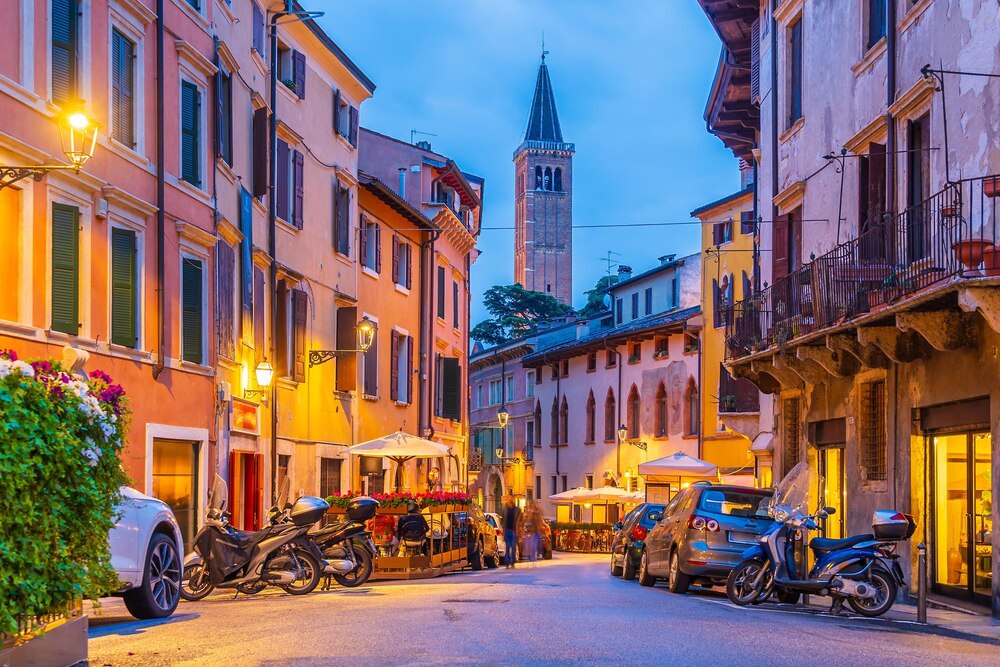
From Piazza Brà, Via Mazzini leads straight into the old town. This is Verona’s main shopping street, busy at almost any hour, mixing international brands with Italian chains and small boutiques. Even if shopping isn’t the goal, the walk itself connects several main sights.
Side streets off Via Mazzini are where the city feels more local. Small bakeries, wine bars, and artisan shops appear as soon as the main flow of people is left behind. A simple approach works: wander, follow whichever alley looks interesting, and regularly check the map to avoid missing the key squares.
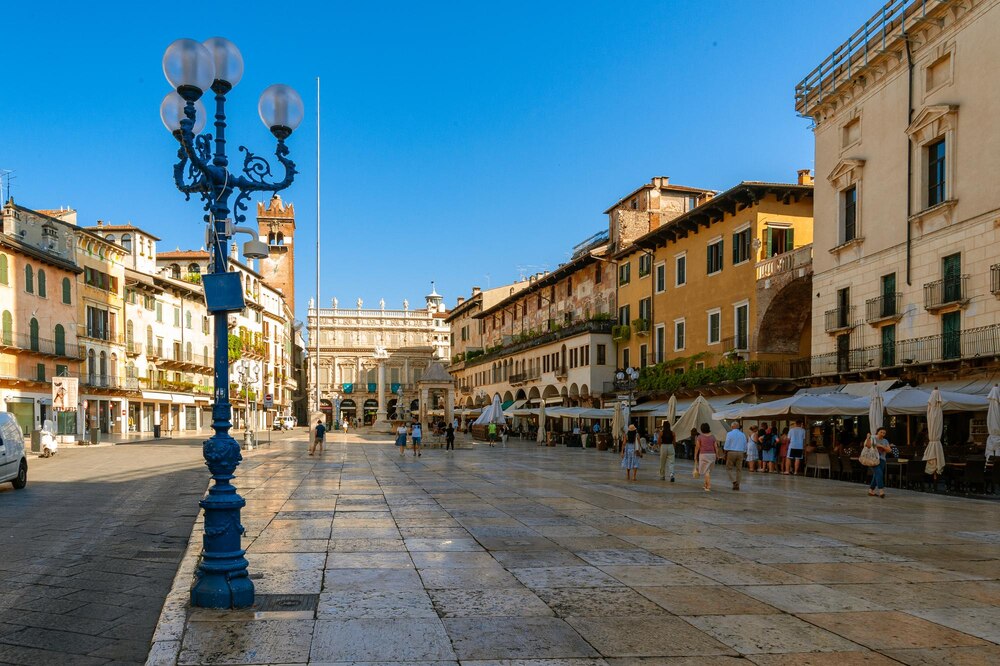
- Piazza delle Erbe – lively market square with frescoed facades
- Piazza dei Signori – more formal, surrounded by historic palaces
- Arche Scaligere – ornate Gothic tombs of the Scaliger family
Piazza delle Erbe is especially good in the mornings, when stalls sell fruit, snacks, and souvenirs. The square can feel crowded and a bit chaotic, but looking up at the old houses and their faded frescoes shows a different layer of the city.
3. Visit Juliet’s House (Strategically)
Casa di Giulietta is one of the most famous and, let’s be honest, most overhyped stops in Verona. The courtyard, balcony, and the statue of Juliet draw steady crowds, and the site leans heavily into the Romeo and Juliet story, which is fictional. Still, it’s such a well-known landmark that skipping it completely feels odd for many visitors.
The smarter approach is to visit at the right time and with the right expectations. Early mornings or late evenings are much quieter. The small courtyard is free to enter, while visiting the house and stepping onto the balcony requires a ticket. The interior includes costumes, props, and a few period rooms; interesting enough if there’s curiosity about the story, but not essential for everyone.
Romeo and Juliet were never real Veronese lovers, but the city has adopted the legend so completely that the fictional balcony is now one of its top attractions.
For a more peaceful and arguably more authentic “Romeo and Juliet” spot, the so‑called Casa di Romeo can be seen from outside on Via Arche Scaligere. There’s no museum inside, but the building gives a sense of medieval Verona with almost no crowds.
4. Cross the River to Castel San Pietro
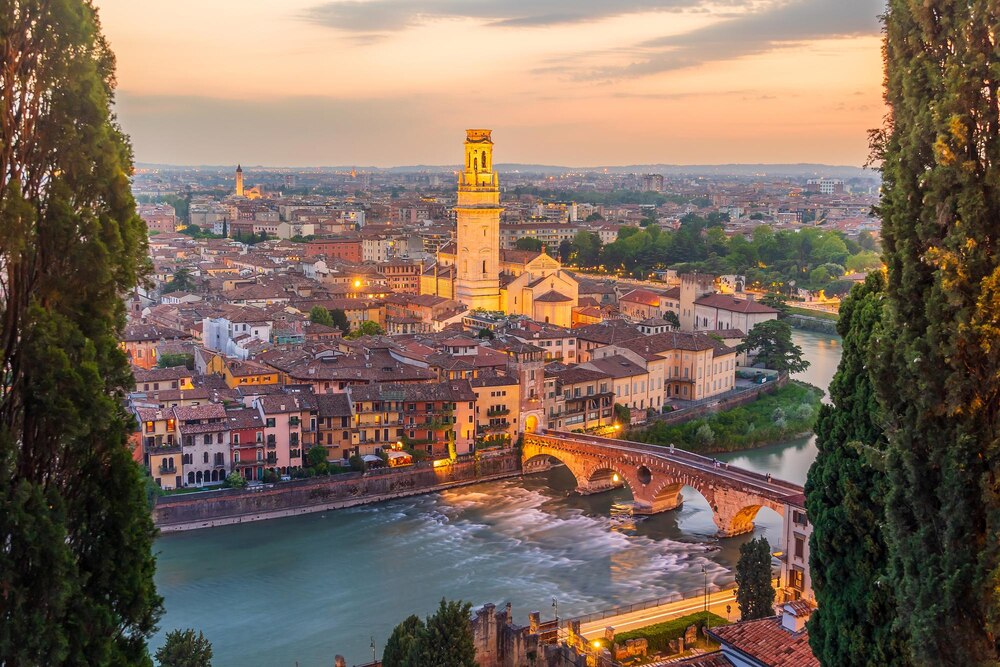
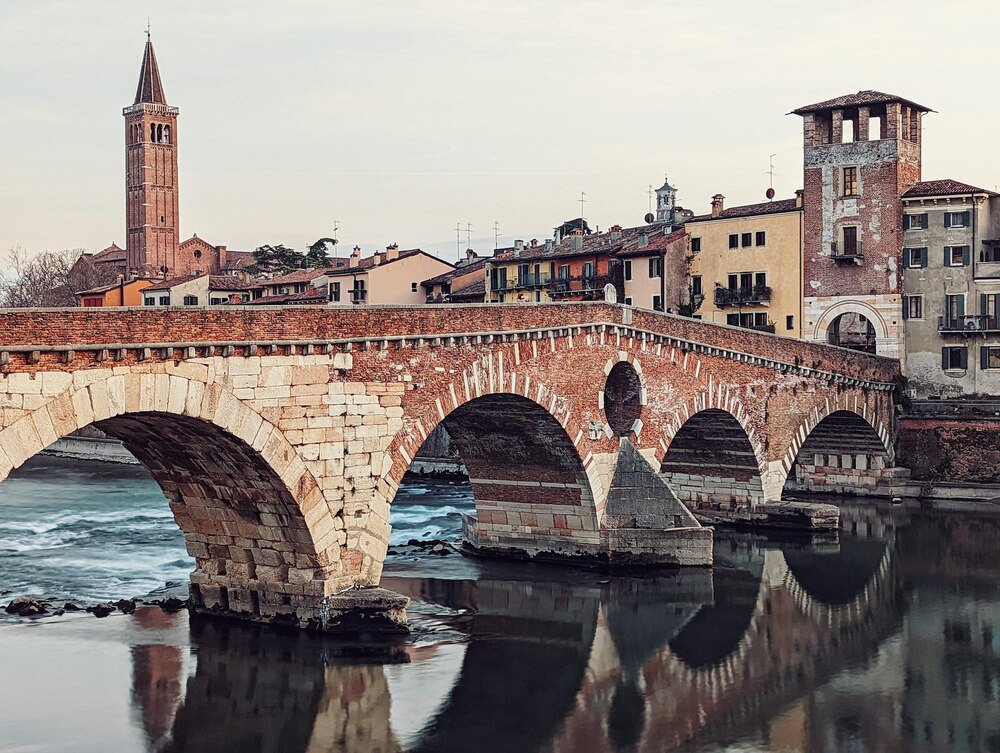
At some point, it’s worth leaving the dense center and crossing the Adige River. The best place to do that is over the Ponte Pietra, a beautiful stone bridge with Roman origins and one of the most atmospheric spots in the city. The view from the bridge toward the hills hints at what comes next.
Climb (or ride) to the viewpoint
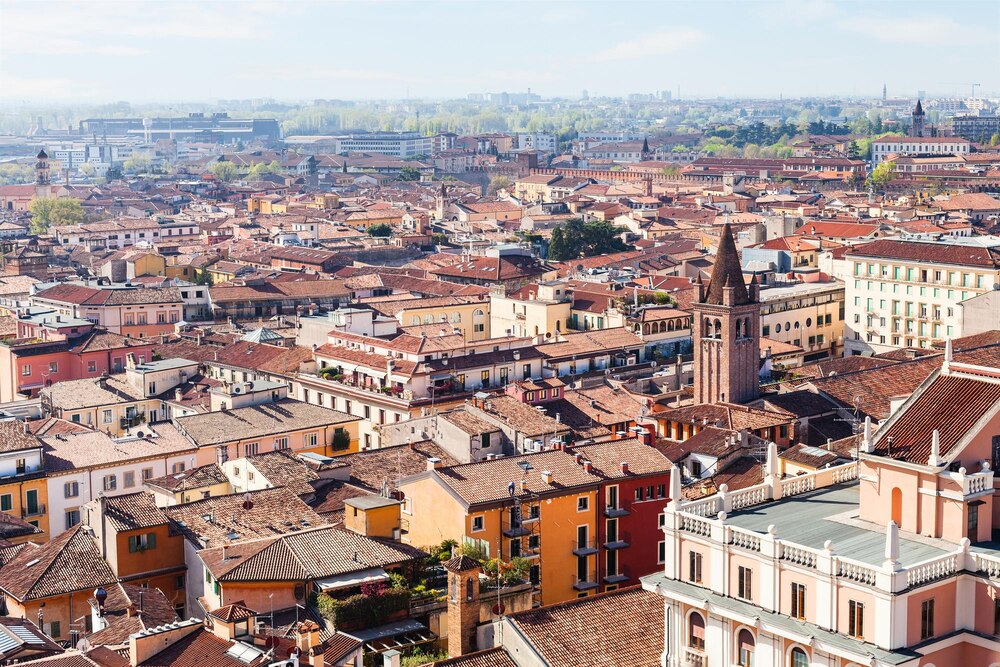
Across the bridge, steps lead up to Castel San Pietro, a hilltop fortress overlooking Verona. The climb is short but steep; a funicular offers an easy alternative and runs often. At the top, the reward is a panoramic view of the entire city: Arena, river, towers, and tiled roofs all in one frame.
This is one of the best places in Verona for sunset. The light hits the old town beautifully, and watching the city slowly light up is a highlight of many visits. There’s usually a mix of locals and travelers sitting on the walls, taking photos, or sharing a drink.
The hill area is also pleasant for a quieter walk. Small paths wind through trees, and a few vantage points offer different angles of the view. For anyone feeling rushed by the crowds near Juliet’s house, this side of the river often feels like relief.
5. See Verona’s Churches and Hidden Corners
Verona’s churches are more than just “one more church to see.” They show different phases of the city’s past and are often less busy than the main squares. A combined ticket for the city’s main churches is available and usually pays off if at least two or three are visited.
- Duomo (Cattedrale Santa Maria Matricolare) – a mix of Romanesque and Gothic, with a quiet cloister
- San Zeno Maggiore – slightly outside the center, beautiful Romanesque basilica
- Santa Anastasia – impressive interior with detailed frescoes
- San Fermo – double church, with an interesting wooden ceiling upstairs
San Zeno is often the favorite. It’s a short walk from the center (or a quick bus ride), set in a calmer neighborhood with fewer tourists. The interior feels peaceful, and the crypt and cloister are atmospheric without any sense of rush.
Between church visits, keep an eye out for smaller corners: hidden courtyards, old city walls, and small shrines built into facades. Verona rewards slow walking more than ticking off a list of sights.
6. Eat and Drink Like a Veronese
Eating well in Verona is not difficult, but the timing and location matter. Many restaurants in the most obvious tourist spots lean on the view more than the food. Stepping a few streets away typically changes the picture completely.
What to try and when to go
Local specialties are hearty and often based on meat and rice. Look for risotto all’Amarone (risotto cooked with local red wine), pastissada de caval (horse meat stew, a traditional dish that not everyone will choose), and gnocchi. In winter, dishes tend to be heavier; in warmer months, lighter pastas and salads appear more often.
For a relaxed evening, the pattern that works best is simple:
- Start with an aperitivo – a spritz or glass of local wine with small snacks.
- Move on to a trattoria or osteria for dinner, ideally with a reservation.
- Finish with gelato during a slow walk around the lit-up center.
Verona is in the heart of the Valpolicella wine region, which means excellent reds are everywhere: Valpolicella Classico, Ripasso, and Amarone. Many wine bars offer tasting flights, which work well for getting a sense of the differences without committing to full bottles.
Lunch can be very simple: a slice of pizza al taglio, a panino, or a board of cured meats and cheese shared between two. This helps keep energy and budget in balance, leaving more space (literally and financially) for a proper dinner.
7. Plan Short Trips Around Verona
Verona’s location makes it an easy base for exploring nearby. Even with only two or three days, adding a short trip can round out the experience.
Popular and easy day trips
Lake Garda is the classic choice. Towns like Peschiera del Garda, Lazise, and Sirmione are reachable by train and bus in under an hour. Peschiera is practical and well-connected, Lazise has a lovely lakeside promenade, and Sirmione stands out with its castle and thermal baths.
Valpolicella is another option for wine lovers. Organized tours leave from Verona and visit a few wineries with tastings and light snacks. For those comfortable driving, renting a car allows stopping at viewpoints and small villages at a slower pace.
For something more urban, Vicenza and Padua are both close by train. Vicenza is known for Palladian architecture; Padua has a lively student atmosphere and the famous Scrovegni Chapel (with booking needed in advance).
From Verona Porta Nuova station, trains reach cities like Venice, Milan, and Bologna in 1–1.5 hours, making Verona a surprisingly strong base for wider northern Italy trips.
8. Practical Tips to Enjoy Verona
Verona’s compact size makes moving around easy, but a few simple choices can improve the experience.
- Best timing: Spring and early autumn are ideal; July and August can be hot and crowded, especially during opera season.
- Verona Card: Worth considering if planning to visit several paid sights like the Arena, Juliet’s house, and major churches.
- Footwear: Streets are cobbled in many areas; comfortable shoes matter more than style here.
- Early starts: Visiting major spots before 10:00 makes a huge difference in crowd levels.
Verona works both as a quick stop and as a base for a longer trip. Focus on a few core sights, add one or two viewpoints, eat well, and leave time to wander without a strict plan. That balance usually leads to the best memories of the city.